
Why your shop stock never adds up, and 5 habits that fix it
Olamide Ademola · · 11 min read
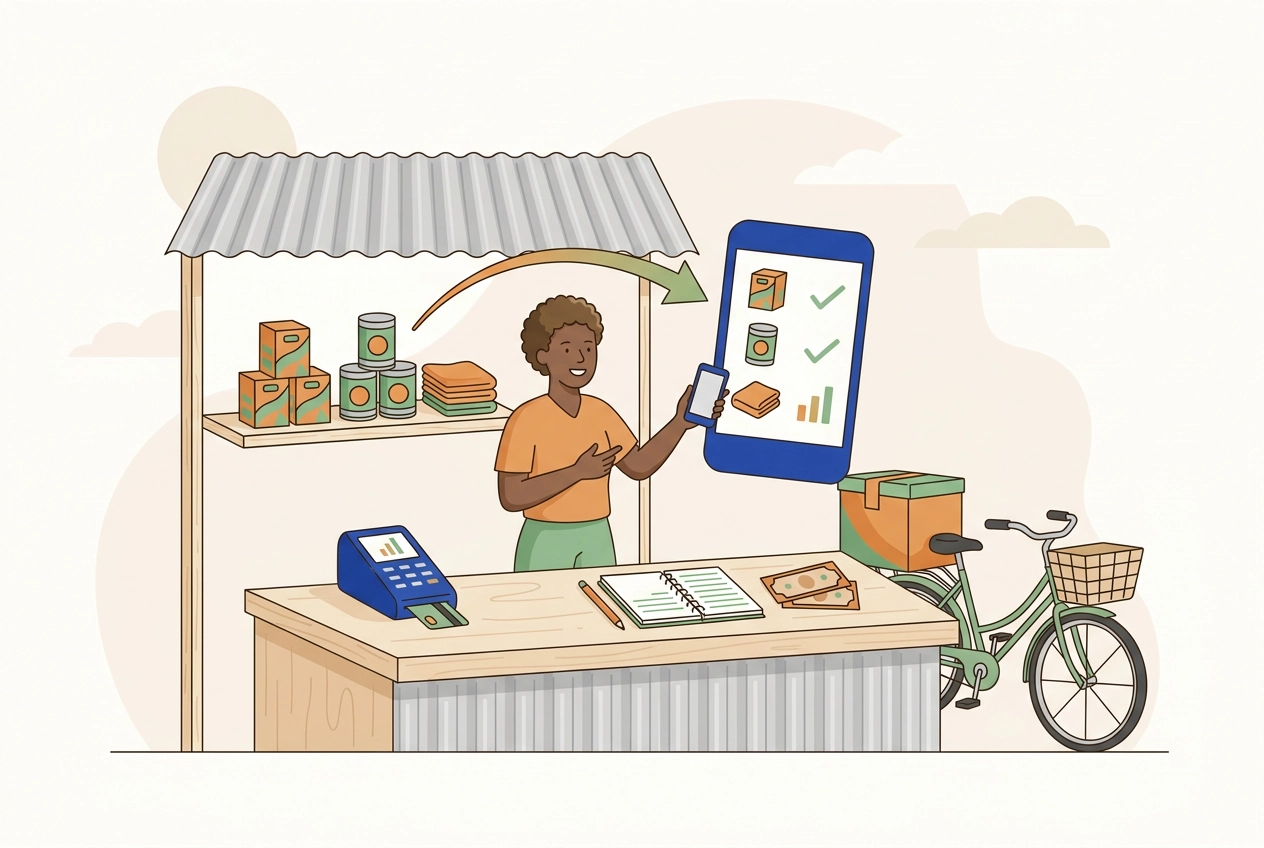
You checked the cartons when the lorry came. You wrote the sales in your notebook. So why does the stock never match?
One week it looks like you have more than you should. The next, a customer asks for an item you were sure was on the shelf. You start to wonder if the problem is your memory, your staff, or just how business works.
It is none of those things. Stock goes missing quietly, through small gaps in how goods and sales are recorded. This post shows you where those gaps start, then gives you five simple habits that close them. We will look at deliveries, counter sales, credit sales and regular counts, and why each one matters for inventory management for small business in Nigeria. For a provision store, a pharmacy or a distributor, these habits fit the way you already work. And you will see how Anvela keeps all of them in one app, on the web and on your phone. Every area of Anvela is free until 12 January 2027 at https://anvela.ng.

Why stock starts going wrong at the door
The trouble usually starts before the item reaches the shelf. The delivery arrives during the afternoon rush. You sign the waybill, the boys carry the cartons in, and nobody writes down what came in, how many, or what it cost.
A carton can be signed for and never shelved, or shelved behind the wrong item. The only proof it existed is a signature you cannot match to a shelf. Supplier invoices sit in a drawer or a WhatsApp chat, so when a ₦180,000 invoice is due you cannot tell which items reached your shop.
Without an arrival record, you cannot separate a short delivery from a carton that walked. You end up blaming the supplier or your staff with no evidence.
In a provision store, a crate ordered as 48 sachets arrives as 24, unnoticed until the shelf runs dry on Saturday. In a pharmacy, a pack is received, priced and put away without a line in any book, so the shelf and the record disagree from day one.
The door is where stock starts going wrong. Fix the arrival record, and later gaps become findable.
Sales kept in a notebook, or only in your head
If receiving goes wrong, sales records make it worse. On a busy afternoon, the notebook gets written at night from memory, so the totals rarely match the money in the drawer. Meanwhile two or three records exist at once: a counter notebook, a second one at home, a WhatsApp chat for orders. None of them agree.
Online and WhatsApp orders are recorded somewhere else, or not at all. So stock drops in one place and stays put in another. Prices also change by customer and by day. A sale written at the wrong price throws off both your profit and the value of what is left on the shelf.
Worst of all, when the day's sales are not written, the money that should have restocked the shop disappears quietly. No one can say which item paid for what.
Credit sales that nobody wrote down
Then there is credit, the quiet way stock leaves. A regular customer takes two cartons today and says he will pay on Friday. You nod, because he always pays. But if it is not written down, the goods leave and the debt is forgotten. Staff also sell on credit to friends, neighbours and fellow traders. Without a name, a date and an amount, you cannot tell a real credit sale from stock that simply walked.
Many shops only record the money when it comes in. So stock reduces on one date and the sale is written weeks later, leaving the count wrong in between. At month end, the question of who owes you becomes a memory test. Money you are genuinely owed slowly turns into money you have lost. A written credit list also protects your staff, because a named, dated entry shows what was sold on credit and what was never recorded at all.
No regular count, so small gaps become big ones
Even with every credit sale written down, a shop that never counts is still guessing. If you only count at year end, you are measuring loss long after it happened, when there is nothing left to trace and nobody left to ask. Fast movers like bread, sachets of milk, malaria drugs and airtime cards leave so quickly that only a weekly count shows a pattern. Counting the whole shop is exhausting, so many shops count nothing at all. A short, fixed list of fast movers is far easier to keep to. Write each count down, date it, and compare it with the last one. Otherwise you find the same gap fresh every month and forget it again. Count stock and cash together. That tells you whether a missing item left as a sale or left without one, which is the difference between a busy week and a leak.
Habit 1: Write goods down the day they arrive
Start with the delivery itself. Before you sign the waybill, count the cartons. If the count is short, write the short figure on the waybill before you put your pen down, so the supplier sees it on their own paper.
Then record what arrived, the quantity, the cost and the date in one place on the same day. Not later in the evening, not next week. Keep that record where you can reach it in seconds, on your phone or on a sheet at the counter, so a busy afternoon does not push it aside.
Before you pay a supplier's invoice, check it against your receiving record. That way you only pay for what actually reached your shelf.
This habit matters because your stock position starts correct from day one. Every difference after that is real, findable, and worth looking into. Now let us get your sales into one record too.
Habit 2: Keep one record for counter and online sales

Recording goods is half the job. Now you need the sales side to match.
Whether a customer buys at your counter, sends a WhatsApp message, calls on the phone or orders from an online shop, that sale goes into one record. One place, every time.
Record as it happens, not at closing. A sale remembered at night is remembered roughly, and roughly is how stock stops adding up.
Keep one price list for counter and online. If you give a discount, write the discount down, so the record still matches the money you collected.
If you sell online, that sale must reduce the same stock you sell from at the counter. Otherwise you will promise a customer an item that left the shelf yesterday.
Why it works: one record means one stock figure, so you never guess which of your two or three numbers is the true one.
Next, let us look at the sale that leaves without any money entering the drawer.
Habit 3: Put every credit sale in writing
The same discipline applies when goods leave without money changing hands. For every credit sale, write the customer's name, phone number, items taken, amount in naira and the date they promised to pay. Treat it as a sale on the day the goods leave, so stock reduces at once and the debt goes on a separate list of who owes you. Set a limit on how much credit a customer or staff member can give without asking you first, and tell everyone the limit. Review the list every week and send a polite reminder before the promised date, not after the money has been forgotten. Why it works: the goods are accounted for from the moment they leave the shop, and the money you are owed stays visible instead of becoming a memory.
Habit 4: Count your fast-moving items every week
With credit written down, the next leak is easier to see: your shelf count. Pick 10 to 20 of your fastest movers, like milk sachets in a provision store or a quick-selling malaria drug in a pharmacy, and count only those. Do it on the same day and at the same time each week. Write the figure down with the date, then compare it with last week so you see movement, not just a single number. If it differs, check it straight away, while the week is fresh and whoever handled the stock still remembers. Once a month or quarter, count everything; your fast movers should already be in order by then. Why it works: a small weekly count catches small gaps early, before losing one or two items a week becomes normal. That weekly figure also gives one person a clear job, which leads neatly into Habit 5.
Habit 5: Give one person the stock job, and check it
Once your fast movers are counted, make sure somebody owns the whole stock job. Name one person for receiving, recording and counting, even if that person is you. Then set a simple routine at a fixed time each day, say before closing, so the record gets done whether the shop is busy or not.
Keep that record where you can see it yourself, without waiting for a report or an explanation. Now and then, rotate the count or double check it, especially when a gap appears. That way, one person is not holding both the stock and the suspicion.
It works because a named person plus a fixed daily routine turns record keeping from something you mean to do into something that actually happens daily.
How Anvela keeps all of this in one app
Keeping that routine going is easier when the records live in one place. Anvela is one app, on the web and on your phone, that does the work of the notebook, the waybill file and the credit list together.
Record goods as they arrive in stock receiving, so what you buy and what you sell sit next to each other and share one stock figure. Sell at the counter and online from the same stock. Share your Anvela Market shop link on WhatsApp, and every order a customer places and pays for there reduces the same count you sell from in the shop. Run counts in the app and see the difference between what you counted and what your records say should be there, with every past count kept, instead of trying to remember what the shelf held last month.
Sell on account to a named customer and the sale carries a due date. Give each customer a credit limit that only you approve, and see who owes you, what is overdue and your VAT position in the books. Set team roles so each staff member sees only what they need to do their job. When the network drops in the shop, the phone app still works offline and catches up when you are back online. Anvela Market also gives you a shop with live stock, pickup and delivery.
The offer: every area of Anvela is free until 12 January 2027. Start at https://anvela.ng.
Start with your next delivery
Anvela puts all of that in one place, but you don't need the app to start. Begin with your next delivery: count the cartons before you sign, then write down what arrived, the quantity and the cost that same day. This week, bring counter, WhatsApp and online sales into one record, and write every credit sale down with a name and a date. Pick 10 fast movers and count them every week on the same day, writing the figure down so you can compare it with last week. Name one person for the stock job, look at the record yourself, and treat any difference as something to check, not something to ignore. If you would rather keep all of it in one place on the web and on your phone, Anvela covers counter and online sales, stock receiving and counts, bookings, the books and team roles, and every area of Anvela is free until 12 January 2027 at https://anvela.ng.
Conclusion
Getting your stock to add up comes down to a few simple habits. Write goods down the day they arrive, keep one record for counter and online sales, put every credit sale in writing, count your fast movers every week, and give one person the stock job. None of these take long, but together they close the gaps that drain your profit.
- Stock
- Stock taking
- Running a business
Home · Start free · Anvela Market · About · Privacy